
Used Transmission Buyer's Guide: Why Fitment Requires More Verification
Consider a common transmission-fitment scenario: a Phoenix repair shop orders a used transmission for a customer’s 2016 Ford Explorer. The listing says 6F35, the correct year, and the correct engine. It bolts up. Fluid goes in. On the test drive the shift points are wrong, the speedometer reads high, and the TCM throws a ratio error. The donor was front-wheel drive with a different final drive ratio. It fit. It didn't work. The car is on the lift, the shop has eight hours of labor in it, and everyone is waiting on a second transmission.
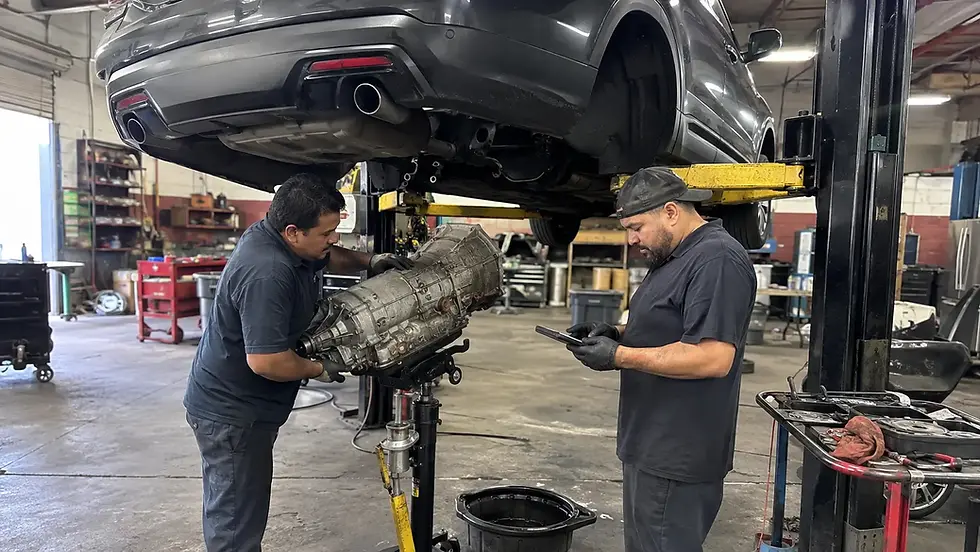
That's the problem in one story. A transmission can bolt up perfectly and still be the wrong unit. Engines are forgiving in matching displacement, generation, and emissions family, and you're close. Transmissions carry gear ratios, calibrations, and module programming that vary inside a single model year. Get one detail wrong and the unit still bolts in.
Why Is Buying a Used Transmission More Complicated Than Buying a Used Engine?
Transmissions vary in ways you can't see from the outside. Two units with the same model number can have different gear ratios, final drive ratios, valve body calibrations, and control module programming, depending on the donor's engine, drivetrain, and trim. A used OEM engine primarily needs to match the vehicle's displacement, generation, and emissions family. A transmission must also match the vehicle's gearing and calibration.
Fitment Factor | Used Engine | Used Transmission |
Electronic match | PCM calibration | TCM calibration, solenoid variant |
Ratio dependency | Not a factor | The gear set and final drive must match |
Drivetrain layout | Rarely matters | Critical 2WD/4WD/AWD housings differ |
What Exactly Has to Match When You Buy a Used Transmission?
A used transmission has to match the original's model and variant, bellhousing pattern, gear ratios and final drive, drivetrain layout, torque converter spec, control module calibration, and shifter linkage. Year, make, and model are not enough; many vehicles used more than one variant in a single model year, split by engine or trim.
Model vs. variant
The designations 6R80, 6T70, 68RFE, A750E, and 8HP70 name the family, not the build. The complete VIN, transmission identification code, donor-vehicle information, and interchange number should therefore be verified before purchase.
Gear ratios and final drive
Your computer and differential expect specific ratios. Using incorrect gear ratios can result in poor shift points, an inaccurately high speedometer reading, ratio codes, and increased wear on the vehicle.
2WD vs. 4WD vs. AWD
Tail housing and output shaft differ, and a 2WD unit has no provision for a transfer case. Hard stop, not a modification.
Torque converter
The torque converter is matched to your engine's torque output and stall characteristics. Many used units ship without one, and a worn converter takes a good transmission with it.
TCM calibration
The TCM calibration sets the shift timing and line pressure based on your vehicle's specific calibration. Some makes need a full reflash; others only need an adaptive relearn. Confirm which one before installing.
How do you verify that a used transmission will fit your vehicle?
Give the supplier your full 17-digit VIN and have them match the donor unit against it before it ships. Your VIN identifies the exact engine, drivetrain, trim, and transmission variant your vehicle was built with, details like a year, make, and model won't reveal. Back it up with the tag number and axle code. The same VIN-first process also applies to an engine fitment check before purchase, where the engine code, electronics, mounts, and transmission mating must be confirmed.
Tag location varies by manufacturer: a riveted tag, a stamped pad, or a sticker near the bellhousing. Your shop finds it in two minutes on a lift. On many trucks the door jamb sticker carries an axle code with the final drive ratio. If a supplier won't run a VIN check before shipping, you've learned what you need to know about them.

FITMENT VERIFICATION CHECKLIST
☐ Your full 17-digit VIN
☐ Donor year, make, model, engine, drivetrain
☐ Transmission model and tag/variant number
☐ Gear ratio or axle code, where applicable
☐ Torque converter: new, used, or none?
☐ Donor mileage and how it was verified
☐ Fluid specification, TCM status, warranty terms
What Does It Actually Cost to Fix or Replace a Transmission?
The cost to fix a transmission runs from a few hundred dollars for a solenoid or sensor to $4,500–$8,000 for a new unit at a dealership. A used OEM transmission installed at an independent shop generally lands between $1,800 and $3,500, depending on the vehicle, the labor rate, and whether the converter is included.
Repair Path | Typical U.S. Range | What Drives the Variance |
Solenoid pack or sensor | $400 – $1,000 | Access difficulty, part cost |
Valve body replacement | $800 – $1,800 | New vs. used valve body |
Used OEM unit + install | $1,800 – $3,500 | Labor rate, converter included |
Remanufactured unit | $3,000 – $5,500 | Brand, coverage, core charge |
Dealership, new unit | $4,500 – $8,000+ | Dealer labor rate, OEM pricing |
These are general ranges, not quotes. Heavy-duty trucks, European vehicles, and AWD run higher, and labor rates swing significantly. Rural Texas and Los Angeles can quote the same job $800 apart.
The cost is not determined by the price of the part alone. That includes the part, the labor, and the converter. The fluid is part of the total cost. That varies from $150 to $400. There's also the programming. A $600 unit that has no converter and no warranty can end up costing more than a verified unit that is priced twice what you pay for labor.

Should You Buy a Used, Rebuilt, or Remanufactured Transmission?
A used OEM transmission is usually the best value when the donor is low-mileage, documented, and VIN-verified; it's the exact unit your vehicle was built with. A rebuild makes sense when your core is worth saving. A remanufactured unit costs more but brings standardized specs and the longest warranty.
Your Situation | Best Choice |
Older daily driver, budget matters | Used OEM, VIN-verified, written warranty |
Newer vehicle, keeping it 5+ years | Remanufactured or a strong rebuild |
Fleet downtime is the real cost | Used OEM in-stock beats waiting |
Diesel, Cummins, Duramax, Power Stroke | Used diesel transmission Beat rebuild lead times |
Does Buying an Automatic Transmission Differ From Buying a Manual?
Yes. An automatic transmission is harder to source correctly because it depends on electronic calibration, valve body configuration, torque converter matching, and control module programming. A manual has fewer variables, a bellhousing pattern, gear ratios, and spline count, but you still have to match the clutch, flywheel, and actuation setup.
Consideration | Automatic | Manual |
Electronic dependency | High TCM, solenoids, relearn | Low |
Coupling component | The torque converter must match | The clutch and flywheel must match |
Fluid specification | Critical, not interchangeable | Still spec-dependent |
What people miss in manuals: clutch and flywheel condition. The transmission is already out; the clutch is a few hundred in parts now, and the whole job will be done again later.
What people miss about automatics: fluid. ATF is not one product. Would you please confirm the specifications of the unit you received, instead of the one you took out? The wrong ATF causes shuddering, overheating, and damage in weeks.
What Makes a Quality Transmission Worth Buying?
A quality transmission has documented donor mileage, a verified variant match, evidence someone inspected it, clean fluid with no burnt smell or metal, an undamaged case, and a written warranty. "Quality" on a listing means nothing unless the seller can tell you what they checked.
A real inspection means fluid color, smell, and metal content; the case is checked for cracks; mounting points for stripped holes; connectors for melting or missing pins; shafts for play; and tag numbers are cross-referenced.
Fluid tells you more than the odometer. Dark fluid that smells burnt with fine metallic glitter means the unit ran hot and clutch material was breaking down. Pink or milky fluid means coolant intrusion from a failed cooler that is contaminated internally.
Mileage alone doesn't provide a complete picture. A 40,000-mile unit from a truck that towed heavily and never saw service can be worse than a maintained 90,000-mile unit. Ask how the donor was driven; it's what separates excellent used auto parts from junk, and knowing how to identify quality-tested used auto parts is worth reading first.

CHECK THIS THE DAY IT ARRIVES.
☐ Photograph the pallet before you cut the straps.
☐ Pull the fluid color, smell, metal content
☐ Confirm the tag number matches your order
☐ Report freight damage same day, claim windows are short
What Are the Warning Signs That Your Transmission Is Failing?
Symptoms of a failing transmission include slipping between gears, delayed or harsh engagement when shifting into drive or reverse, whining or grinding noises, burnt-smelling fluid, leaks, and the appearance of a transmission warning light. Several point to failures that are repairable without replacing the unit, which is why a diagnosis first can save you thousands.
Symptom | What It Often Means | Repairable? |
Slips between gears under load | Worn clutch packs, low fluid | Sometimes check fluid first |
Delayed engagement into Drive | Low fluid, seals, valve body wear | Often |
Harsh or slamming shifts | Solenoid or valve body | Often |
A whine that changes with speed | Pump or bearing wear | Usually not internal |
Burnt smell in the fluid | Overheating, clutch breakdown | Rarely |
Pink or milky fluid | Coolant intrusion, failed cooler | No contamination |
No movement in any gear | Pump failure, broken component | replacement |
Warning light only | Sensor, solenoid, or TCM fault | Often scan first |
Get the codes read before you buy anything. A transmission warning light can be a $200 speed sensor. Shops see customers every month who bought a transmission for a problem a scan tool would have found in twenty minutes.

What Questions Should You Ask Before Buying a Used Transmission?
Ask for the donor's year, make, model, engine, and drivetrain; the tag number; the mileage; whether the converter is included; what was inspected; the warranty; and whether they'll verify against your VIN. Send this list as-is:
1. Donor vehicle year, make, model, engine, drivetrain?
2. Transmission model and tag/ID number?
3. 2WD, 4WD, or AWD?
4. Donor mileage, and how was it verified?
5. Torque converter included: new, used, or none?
6. Was it inspected? What specifically?
7. Fluid condition at inspection?
8. Is TCM included, or do I reuse mine?
9. Will you verify fitment against my VIN before shipping?
10. Warranty: How long, what's covered, and what voids it?
11. What if it’s damaged or the wrong size when it arrives?
12. Freight cost and packaging?
A supplier who answers all twelve without hesitating knows what's on their floor. A supplier who provides vague answers to questions 3, 5, or 9 is likely guessing, which can result in additional costs for you.
How Does Blue Prism Automotive Handle Used Transmission Fitment?
Blue Prism Automotive supplies OEM used engines and transmissions, not aftermarket units or generic rebuilds. Every unit ships with donor documentation, and fitment is cross-checked against your VIN before it ships, not after you call.
Units are inspected before listing: fluid condition, case integrity, connectors, and mounting points. Freight is quoted upfront and packaged for the weight, pretending it's free just moves the surprise to the invoice. Coverage is 6 months standard, extendable to 12; the transmission and engine warranty spells out what voids it. Inventory covers gas, diesel, and Japanese (JDM) applications.
BEFORE A TRANSMISSION LEAVES OUR FACILITY
☐ Donor year, make, model, engine, and drivetrain documented
☐ Transmission model, variant, and mileage recorded
☐ Your VIN cross-checked against the unit
☐ Warranty in writing 6 months standard, up to 12 extended
☐ Freight quoted and packaging confirmed
We won't tell you every used transmission is perfect. We'll tell you what we know about the one you're buying, and we'll verify it against your vehicle before it ships.
The Key Takeaway for Buyers
Knowing how to identify quality-tested used auto parts comes down to replacing trust with verification. Ask what testing was performed and what it measured. Get donor details and mileage in writing. Confirm the part number against your VIN. Read the warranty before you pay, not after something fails. Used parts carry real risk, but documented, inspected OEM units carry far less of it than an untested part with a confident listing description.
Frequently Asked Questions
Is it safe to buy a used transmission?
Yes, if you verify it. The risk is the wrong variant or an undocumented unit, not the fact that it's used.
How much does it cost to fix a transmission?
From about $150 for a fluid service to $8,000+ for a new dealership unit. A used OEM unit installed independently runs $1,800 to $3,500.
How long does a used transmission last?
It depends on donor condition and post-install care. A low-mileage unit, inspected and serviced on schedule, runs past 100,000 miles.
Can I put a transmission from a different year in my car?
Sometimes, but never assume it is. Manufacturers change ratios and calibrations mid-generation. Give the supplier your VIN and let them confirm what actually interchanges.
Does a used automatic transmission need to be programmed?
Often, yes. Many vehicles need the TCM reflashed, and most need an adaptive relearn. Ask your shop which one applies.
Should I replace the torque converter with a used transmission?
Almost always. If your original failed, debris sits in the old converter, and reusing it contaminates the replacement.
What's the difference between a rebuilt and a used transmission?
A used unit is original OEM, pulled from a donor and sold after inspection, never opened. A rebuilt unit was disassembled and had worn clutches and seals replaced.
How do I know if my transmission is bad or if it's something else?
Have the codes scanned first. Harsh shifting, hesitation, and warning lights are sometimes a speed sensor, a solenoid, or low fluid.


