
Ford F-150 Engine Interchange Guide (Years, Fitment & What's Worth Buying)
If your F-150 engine is done and you're looking at a replacement, the first thing you'll notice is how many options are out there, and it gets confusing really fast. There are different years and variants, engines that may appear similar but are not, and listings that often lack sufficient information.
This guide cuts through all of that. It covers exactly which F-150 engines interchange with which years, what actually changes between generations, and what to watch out for before you spend any money.

Why F-150 Engine Swaps Aren't as Simple as They Look
The Ford F-150 has gone through more powertrain changes than most trucks in its class. Over the past 2 decades, Ford has moved from modular V8s to the Coyote platform to turbocharged EcoBoost engines, and each shift brought major changes to not just the engine itself but everything around it.
We're talking about engine mounts, oil pan design, cooling layout, wiring harnesses, fuel systems, and the transmission logic tied to each specific motor. Two engines from different generations might physically sit in the same bay with some effort, but that doesn't mean the truck will run right once you turn the key.
The rule that holds across every successful F-150 engine swap is the same generation, same platform, and matched electronics. The builds that fail are the ones where someone assumed a 5.0 is just a 5.0 and skipped the details.
F-150 Engine Generations: What Changed and When

Before diving into the details of each era, use this quick reference table to find your year range and see what swaps are compatible with your vehicle
Year Range | Engine | Type | Compatible Swap Range | Transmission | ECU Requirement | Swap Difficulty |
1997–2003 | 4.6L V8 (2-valve) | Modular | 1997–2003 only | 4R70W | OEM match | Easy |
2004–2008 | 4.6L V8 (3-valve) | Modular | 2004–2008 | 4R75E | OEM match | Easy |
2004–2008 | 5.4L V8 (3-valve) | Modular | 2004–2008 | 4R75E | OEM match | Easy |
2009–2010 | 5.4L V8 (3-valve) | Modular | 2004–2010* | 4R75E | Reflash needed | Moderate |
2011–2014 | 3.7L V6 Cyclone | Naturally Aspirated | 2011–2014 only | 6R80 | Full donor set | Moderate |
2011–2014 | 5.0L V8 Coyote Gen 1 | Naturally Aspirated | 2011–2014 only | 6R80 | Full donor set | Moderate |
2011–2014 | 3.5L EcoBoost V6 | Turbocharged | 2011–2014 only | 6R80 | Full system swap | Hard |
2015–2017 | 2.7L EcoBoost V6 | Turbocharged | 2015–2017 only | 6R80 | Full system swap | Hard |
2015–2017 | 5.0L V8 Coyote Gen 2 | Naturally Aspirated | 2015–2017 only | 6R80 | Full donor set | Moderate |
2015–2017 | 3.5L EcoBoost V6 | Turbocharged | 2015–2017 only | 6R80 | Full system swap | Hard |
2018–Present | 5.0L V8 Coyote Gen 3+ | Naturally Aspirated | 2018+ only | 10R80 | Full system swap | Hard |
2018–Present | 2.7L / 3.5L EcoBoost | Turbocharged | 2018+ only | 10R80 | Full system swap | Hard |
*2009–2010 can go into 2004–2008 trucks with ECU reflash, a common and confirmed upgrade path.
Modular Era — 1997 to 2010
The engines Ford used during this period were the following:
4.2L V6
4.6L V8 (2-valve and 3-valve versions)
5.4L V8 (2-valve and 3-valve versions)
These all share what's called a modular bellhousing pattern, meaning the mounting footprint is similar, but that's about where the similarity ends. The 2-valve and 3-valve versions of the 5.4L engine, despite having the same displacement, are distinct engines. The cylinder heads, intake manifold, ignition setup, and ECU strategy are all different between them.
The most common mistake in this era is dropping a 3-valve 5.4L into a truck that originally had a 2-valve. The engine will bolt in, but the wiring and computer mismatch cause problems immediately, such as rough idle, misfires, or a no-start condition. The ECU doesn't know how to talk to the newer valve train components, and the truck lets you know about it.

The 5.4L also has a taller deck height compared to the 4.6L, which affects intake clearance and how the accessories sit in the engine bay. It isn't a deal-breaker, but it's something to consider.
One more thing specific to this era: the cam phasers on the 5.4L 3-valve are known as a weak point. If you're replacing a used Ford 5.4L engine from this generation, those phasers should be inspected or replaced before the engine goes into your vehicle. Doing it for the first time with the engine out is way cheaper than doing it later.
A 5.4L Expedition engine from the same era is one of the most commonly sourced OEM units for this swap, same block, same specs, and typically lower mileage.
Early Coyote Transition — 2011 to 2014
This phase is where Ford moved into fully integrated modern electronics, and the engines available in this window were:
3.7L Cyclone V6
5.0L Coyote V8 (Gen 1)
3.5L EcoBoost V6 (first version)
The Gen 1 Coyote is one of the most swap-friendly modern engines Ford has made, but there are a few catches that trip up a lot of people: the F-150 version and the Mustang version are not the same engine. The truck Coyote uses a different oil pan, a different intake manifold, and a different accessory drive setup. If you're sourcing a Coyote for an F-150, you need to confirm it came out of a truck, not a car.

The early EcoBoost adds another layer entirely. These engines use turbochargers and direct injection, which change the fuel system requirements, the cooling demands, and the ECU calibration. An EcoBoost swap isn't just an engine swap; it's a system swap.
Best OEM Used Engine Options — Early Coyote Era (2011–2014)
The 2011–2014 5.0L Coyote sourced from an F-150 (not from a Mustang) is one of the best used Ford engine purchases you can make for a truck in this range. These engines have strong parts availability, excellent longevity with proper maintenance, and when you match them to the correct ECU and harness from the same truck generation, the swap is straightforward.
The key is keeping the system together. That means sourcing the engine with its matching ECU, wiring harness, and transmission where possible. Buy the engine alone, and you'll spend more time and money chasing compatibility issues than you saved.
The 3.7L Cyclone is a viable budget option for trucks that don't need the power of the 5.0L. These engines are generally reliable and available at lower price points as used OEM units.
Mid-Generation Update — 2015 to 2017
Ford made two significant changes in 2015: they moved to aluminum body panels, and they updated the engine lineup with revised versions across the board.
2.7L EcoBoost introduced
5.0L Coyote Gen 2
Revised 3.5L EcoBoost
The Gen 2 Coyote is not a drop-in replacement for the Gen 1. Ford revised the internals and changed the control strategy, which means you can't take a Gen 2 and run it on the original Gen 1 ECU (engine control unit) without issues. If you're replacing an engine in a 2015–2017 truck, you need to stay within that same generation window.
The 2.7L EcoBoost is a strong performer for its size, but it adds the same system complexity as the 3.5L: turbo plumbing, direct injection, and an ECU that needs to match exactly.
Best OEM Used Engine Options — Mid-Gen Era (2015–2017)
For trucks in this window, the 2015–2017 5.0L Gen 2 Coyote is the most practical used OEM engine to source. These are performance-oriented, well-documented engines with good availability as trucks from this era reach higher mileage, and owners look to extend their lives.
The 2.7L EcoBoost is worth considering if the original engine in your truck is the 2.7L. Staying with the same displacement keeps your transmission pairing intact and avoids the need to recalibrate the fuel and cooling system. Always source this engine with its turbochargers inspected; check for shaft play and oil contamination before purchasing it.
Modern Platform — 2018 to Present
At this point, interchange options become very tight.
The engines from this time period, Gen 3 and newer Coyotes and updated 2.7L and 3.5L EcoBoost variants, are closely connected to drive-by-wire systems, use both port and direct injection at the same time, and have control modules for the 10-speed automatic transmission. The transmission itself communicates constantly with the engine, and if those signals don't match, you get hard shifts, slipping, and eventually transmission failure.
For trucks in this range, the practical answer is straightforward: look for a like-for-like replacement from the same year window, and bring the ECU and harness with it if at all possible.
The Five Fitment Factors That Make or Break a Swap
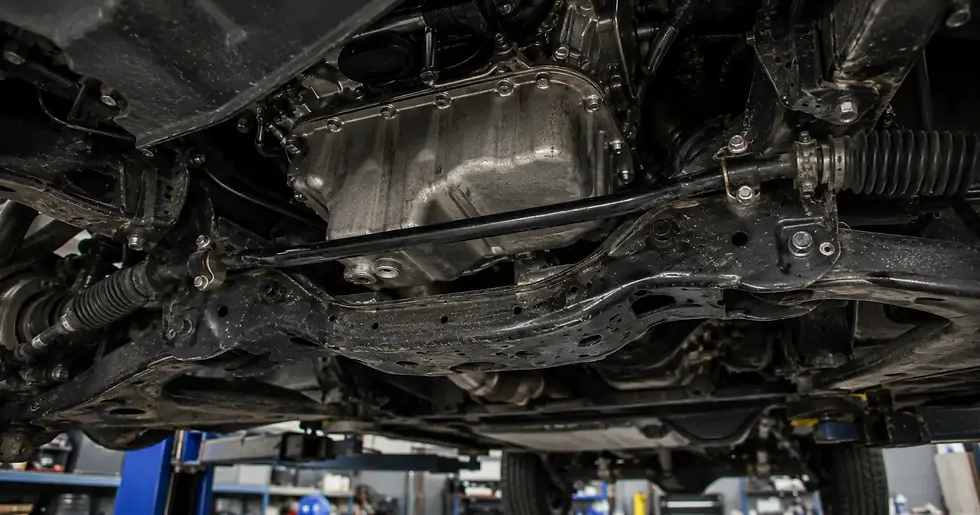
Understanding the generation is step one. But there are five specific areas where even well-matched swaps go wrong if they're not addressed properly.
1. Engine Mounting :
The F-150 engine bay changes shape depending on the generation. Crossmember position, frame width, and clearance around accessories are not consistent across years. If the mounts don't line up exactly, the engine can sit slightly forward or backwards, which changes the driveline angle. A bad driveline angle shows up as vibration under load and accelerated wear on the transmission and driveshaft, problems that don't show up on a test drive but become obvious at 60 mph on the highway.
2. Oil Pan and Pickup Tube:
This is one of the most common physical blockers in F-150 swaps. Truck engines use deeper oil pans for capacity. If you drop a Mustang Coyote into an F-150, the Mustang's shallow pan may not clear the crossmember. The pickup tube is matched to the pan; if you mix them, you risk oil starvation under hard acceleration or braking. This is how engines fail after swaps that looked fine initially. Always use the oil pan and pickup tube matched to the F-150 chassis, not the donor vehicle.
3. Cooling System:
Cooling problems rarely show up in the shop. They show up on the highway two weeks after the job is done. Hose routing, radiator sizing, and thermostat housing positions vary across F-150 generations. A hose that fits but has a sharp bend will collapse under load. A radiator that's the wrong size for the engine's heat output will overheat at sustained highway speeds, even when the idle temperature looks fine. Match the radiator, hoses, and thermostat orientation to both the engine and the chassis. Avoid sharp bends and ensure that hoses reach their connections without stretching.
4. Electronics, ECU, and PATS:

This is where the majority of modern F-150 swaps fail. From 1996 onward, Ford has used PATS, the Passive Anti-Theft System. The ECU (Engine Control Unit) and the key are paired, meaning they must communicate with each other for the vehicle to start properly. If you install a different ECU, the truck may either crank without starting or start and then immediately shut off. From 2011 onward, everything runs through a CAN bus network, meaning the engine, transmission, and chassis systems are all talking to each other constantly. The only clean solution is to use a complete donor setup: engine, ECU, harness, and key system, all from the same vehicle. Anything short of that turns into a diagnostic process that takes longer and costs more than just doing it right from the start, as mismatched components can lead to compatibility issues and increased troubleshooting time.
5. Transmission Pairing:
The transmission in an F-150 is tuned to the torque curve, shift logic, and ECU communication of a specific engine. Common matched sets are the 5.4L with the 4R75E, Gen 1 Coyote with the 6R80, and newer Coyotes with the 10R80. Mix the engine and transmission from different generations, and the transmission control module won't receive the data it's expecting. The result is hard shifting, slipping under load, and overheating. Keep the engine and transmission as a matched set from the same generation.
What a Replacement Actually Costs
Being realistic about cost upfront saves a lot of frustration. The table below breaks down what to expect depending on the type of swap you're doing.
Swap Type | Engine Example | Typical Parts Cost | Key Complexity |
Same engine, same generation | 5.4L → 5.4L (2004–2008) | $2,500–$4,000 | Minimal — direct replacement |
Same family, minor differences | 5.4L 2-valve → 3-valve (same gen) | $3,000–$4,500 | ECU reflash or swap required |
Cross-generation swap | Gen 1 → Gen 2 Coyote | $3,500–$6,000 | Wiring, mounts, ECU, fuel system |
Full EcoBoost system swap | 3.5L EcoBoost cross-gen | $5,000–$8,000 | Turbo, intercooler, full electronics |
Mustang Coyote → F-150 conversion | 5.0L Mustang into F-150 | $4,000–$7,000 | Oil pan, mounts, ECU, and accessories all changed |
Labor rates vary by shop and region. These ranges reflect typical costs across the US market. Builds that skip compatibility verification before purchasing an engine almost always land at the higher end of these estimates or beyond, and choosing the right engine mechanic upfront keeps those costs predictable
Quick Checklist Before You Buy an F-150 Engine
Before spending any money, confirm the following:
Engine code and generation match your truck exactly
VIN compatibility has been verified
Transmission pairing is confirmed
Oil pan configuration matches the F-150 chassis
ECU and PATS requirements are identified
Known failure points are inspected: cam phasers on the 5.4L, turbo shaft play on EcoBoost engines, timing chain condition on high-mileage Coyotes
These aren't optional. They're the same things shops run through on any used engine installation checklist, skip them and the problems show up after the job is done.
Final Takeaway
F-150 engine swaps have a reputation for being complicated, and that reputation isn't bad, but the complexity isn't random. It follows a clear pattern: the further you stray from a matched, same-generation swap, the more systems you're asking to cooperate that weren't designed to work together. The trucks that come out right are almost always the ones where the engine, ECU, transmission, and chassis were treated as a single system, not four separate decisions.
If you're still figuring out which engine fits your specific year and build, the best move before purchasing is a quick compatibility check. Knowing your engine code, VIN, and transmission type is enough to confirm the right match, and it takes five minutes to do so before committing to anything.


